Cleaning the turned part to be coated
The workpiece is first cleaned of foreign bodies and degreased.

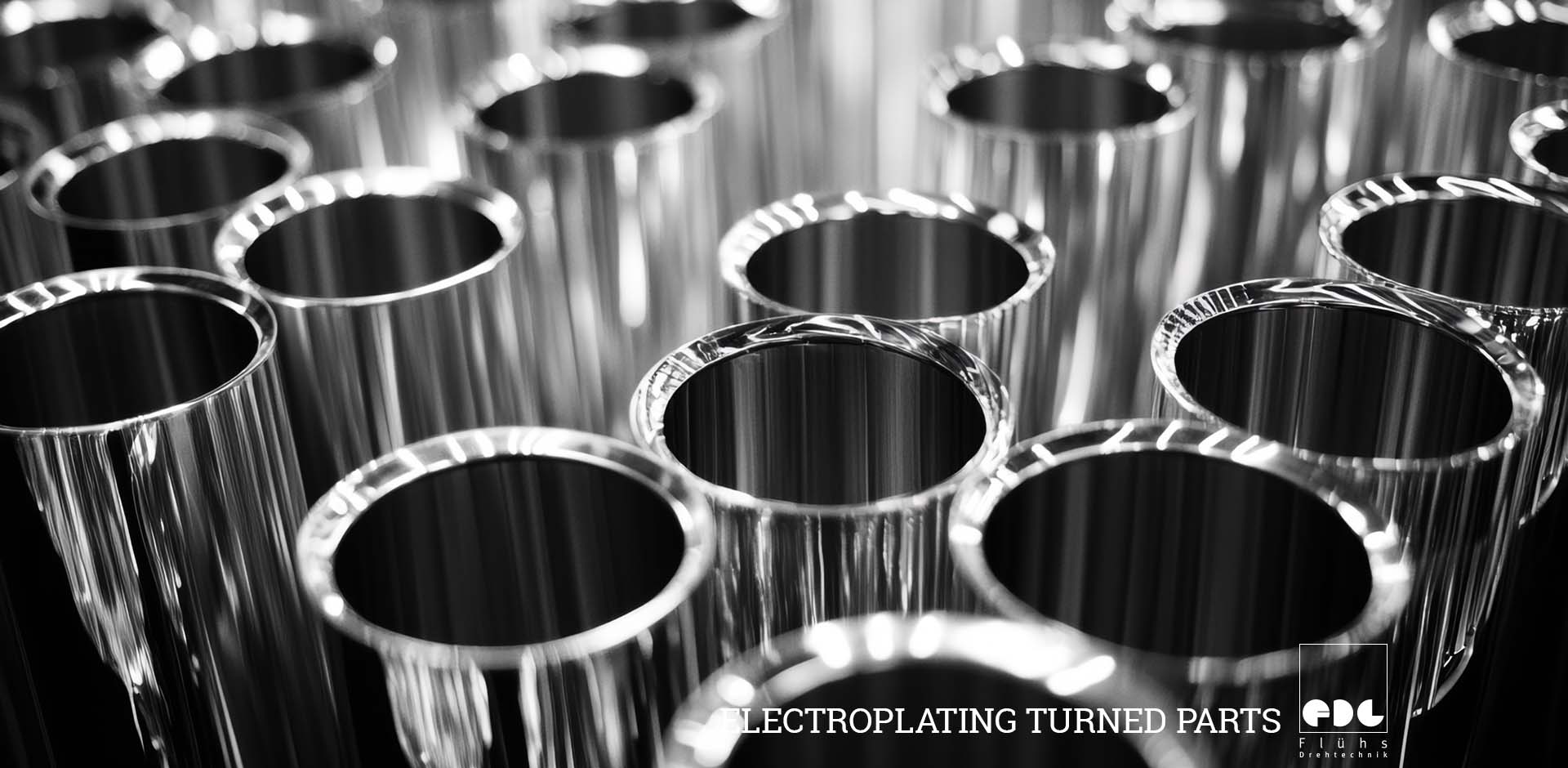
At Flühs, electroplating (galvanizing) is available as a service. During electroplating, the part receives an additional metallic coating that protects the underlying material.
Electroplating is a process for refining metal surfaces with the purpose of improving certain qualities of the metal, such as hardness, corrosion resistance, visual appearance or electrical conductivity.
The electroplating of turned parts contributes to their longevity by increasing their resistance to corrosion or wear.
Electroplated turned parts are used in several industries, including building and medical technology and the automotive industry. Examples include screws, nuts, valves and connecting elements.
The electroplating process is based on 3 central components: the workpiece to be coated, the coating metal and an electrolytic solution. This conducts electrical current and enables the targeted transport of metal ions, which are deposited evenly on the surface of the workpiece.
Flühs Drehtechnik offers the electroplating process as part of additional surface treatment services. We work to the highest quality management standards, based on DIN EN ISO 9001, VDA 6.1 and ISO TS 16949. For detailed information, please contact info@fluehs.de or call us on +49 2351 975-0.
The following text deals with the advantages and procedures of electroplating for turned parts and describes their most important areas of application in detail. At the end there is a detailed explanation of how the electroplating of turned parts works.
The advantages of electroplating turned parts are that the process improves corrosion protection, mechanical strength, durability and the appearance of the turned parts. The process is also economically attractive, especially for medium to large quantities.
Electroplating turned parts has the following 5 main advantages.
Electroplating is a cost-effective process for the surface treatment of metals. The decisive factor for the price is the transition metal that is used for the coating. While galvanizing is particularly economical, high-quality precious metals such as rhodium or gold incur significantly higher costs.
The additional layer that is applied to the turned part by electroplating offers improved corrosion protection. For example, the zinc layer applied to galvanized turned parts that are exposed to moisture decomposes first.
The additionally applied metal layer increases the abrasion resistance of the turned part. This is because the applied layer is attacked first when the material is stressed.
The increased resistance of the turned part to corrosion and abrasion contributes to a longer service life.
Optics play a major role in visible elements, e.g. in the household or in the automotive industry. Electroplating provides a shiny surface that is easy to clean.
The electroplating of turned parts serves to enhance the quality of the metal. At Flühs, we electroplate turned parts on request and offer this as an additional service. In the following section, you can find out how we carry out the electroplating process.
At Flühs Drehtechnik, we offer electroplating of all types of turned parts. The following list explains how the electroplating of turned parts works.
Cleaning the turned part to be coated
The workpiece is first cleaned of foreign bodies and degreased.


Rinsing off cleaning residues
The component is rinsed with water in an intermediate step to remove all residues from the cleaning process.
Electroplating
The cleaned turned part is immersed in an electrolytic solution containing metal ions of the desired coating material. Under electrical voltage, these metal ions are deposited on the surface in a controlled manner.


Removal and inspection
As soon as the desired coating thickness is reached, the workpiece is removed and inspected visually and by measurement.
Final rinsing and drying
Finally, a rinsing process is carried out to remove electrolyte residues before the component is dried and further processed or packaged.

Our high-quality turned parts are mainly made of brass, an outstanding material that is characterized by excellent machinability, high dimensional accuracy and good thermal conductivity. Common electroplating processes for brass turned parts include galvanizing, nickel-plating or chrome-plating.
Galvanizing involves applying a zinc coating to the turned part. Depending on the requirements, different processes are used, either electrogalvanizing or hot-dip galvanizing. Electrogalvanizing involves the electrochemical application of an even, thin layer of zinc. Electrogalvanizing is ideal for small parts such as screws, nuts or fasteners where dimensional accuracy is crucial. In hot-dip galvanizing, the component is immersed in a bath of molten zinc. This creates a thick, resistant protective layer. This method is usually used for larger or heavily loaded steel parts, e.g. beams, pipes or connecting elements in outdoor areas.
When nickel-plating metals, nickel ions are transferred to the metal surface of the turned part by an electric current, forming a layer of nickel. Nickel is softer than chromium and offers less corrosion protection, which is why it is used in environments with low corrosion exposure, such as office buildings. Nickel increases adhesion. For this reason, nickel plating must be carried out before chrome plating brass. Nickel plating is also relevant for technical installations (e.g. measuring devices) that are in the user's direct field of vision. Nickel plating allows individual components to match the color of their surroundings, for example.
In chrome plating, the turned part is covered with a layer of chrome using an electrochemical process. Chrome-plated surfaces are easier to clean and contribute to an increased service life and corrosion resistance of the metal. Chrome-plated parts are often found in pump parts and sanitary fittings that have a certain visual appearance.
Electroplated turned parts are relevant for many industries. The main areas of application for electroplated turned parts are described below.
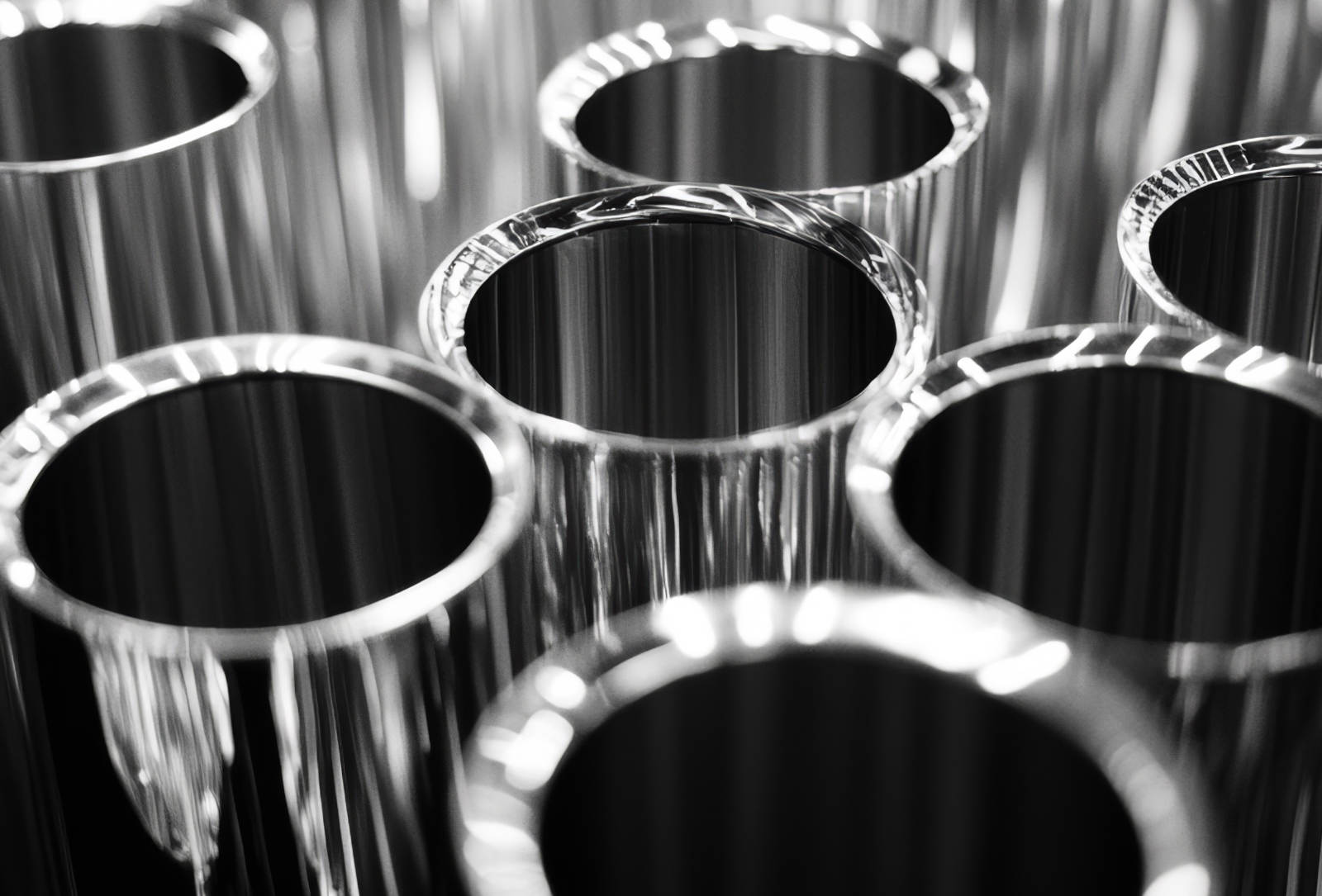
Electroplated turned parts are used in a wide range of industries, including automotive industry, medical technology, building technology and mechanical engineering.
In the automotive industry, electroplated turned parts are used in the form of screws, joints, bolts, etc. In this case, the main function of electroplating is to protect against rust and thus optimize the longevity of the components.
Electroplated turned parts in the medical sector can be found in surgical or dental equipment, for example. Here, electroplating promotes the hygiene of the instruments by ensuring a rust-free surface.
In the building technology sector, electroplated turned parts are used in both the HVAC (heating, ventilation and air conditioning) and electrical industries. Electroplating improves the electrical conductivity of metals, which is particularly relevant for connection components in electrical engineering. Electroplated turned parts in the HVAC sector are used in control and regulation technology, heating and cooling as well as in sanitary fittings. Examples include fittings, nuts, hose connections and spindles.
In mechanical engineering, galvanized turned parts can be found in axles, gears, pistons and connecting components. The mechanical load on turned parts in this area is very high. Electroplating protects against abrasion and wear caused by chemicals, grease or moisture.
Electroplated turned parts are important components for many industries. But how does the electroplating process for turned parts work? This question is answered in the last section.
Turned parts are electroplated by passing electricity through an electrolytic solution, causing positively charged metal ions to move to the negatively charged workpiece and form a layer of metal or alloy on the turned part.
In electroplating, the workpiece acts as the cathode and the metal with which it is to be coated acts as the anode. The workpiece and coating material are immersed in an electrolyte solution and then connected to a power source. When the current flows through the electrolyte solution, the metal is applied to the workpiece. This happens because the metal ions move from the anode to the negatively charged workpiece and form a layer.
Chrome plating is a common electroplating process for sanitary fittings, machine components and medical instruments. In this case, the turned part to be electroplated is immersed in a chrome solution. A chromium plate serves as the anode and the turned part as the cathode. The chrome is deposited on the surface of the turned part as soon as current flows through the electrolyte solution.
In many cases, the workpiece is nickel-plated before chrome-plating so that the chrome layer adheres better. This step may not be necessary if the workpiece is made of a nickel-containing metal. It should be noted that nickel is toxic to humans. There are therefore strict limits for drinking water pipes.
The electroplating process can be applied to almost all metals, although the basic procedure remains largely the same. Exceptions are metals that have strong oxide layers, such as aluminum, titanium, chrome or tin. They can either not be electroplated at all or only with special pre-treatment.
Flühs Drehtechnik offers electroplating of turned parts as a service.
Please fill in the blanks below and send us your questions and requests.